
The core value of digital voltage protector
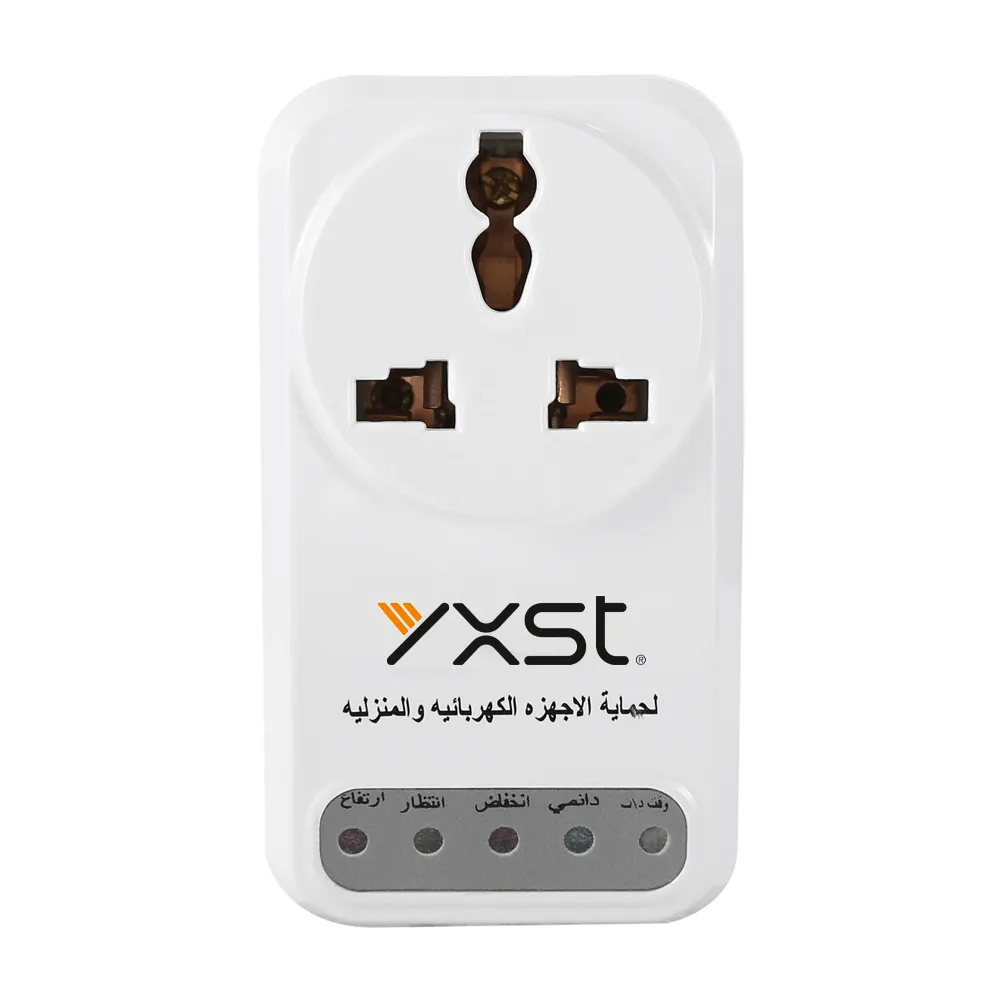
As a key device for modern power safety, the digital voltage protector provides multiple protections such as overvoltage, undervoltage, and surge for household appliances and small industrial equipment through intelligent monitoring and rapid response mechanisms. Compared with traditional mechanical protection devices, its core advantage lies in its precise control and adaptive adjustment capabilities. For example, a mainstream model of low-voltage protector can automatically cut off the power supply when the voltage is lower than 165V or higher than 265V, and delay 5-299 seconds to re-power after returning to normal, avoiding the impact of frequent switching on and off on the equipment.
Technical principles and functional classification
Basic protection mechanism
The digital voltage protector collects circuit data in real time through voltage transformers and current transformers and analyzes it in combination with an MCU (microcontroller unit). Its core functions include:
Overvoltage protection (such as 265V cut-off)
Undervoltage protection (such as 140V cut-off)
Surge absorption (140J energy suppression)
Delayed recovery (avoiding repeated start and stop caused by grid fluctuations)
Innovation in modular design
The modular digital protector adopts a pluggable structure, and users can choose different functional modules according to their needs. For example:
Voltage/current dual display module: real-time cycle display of values, support manual switching of display modes.
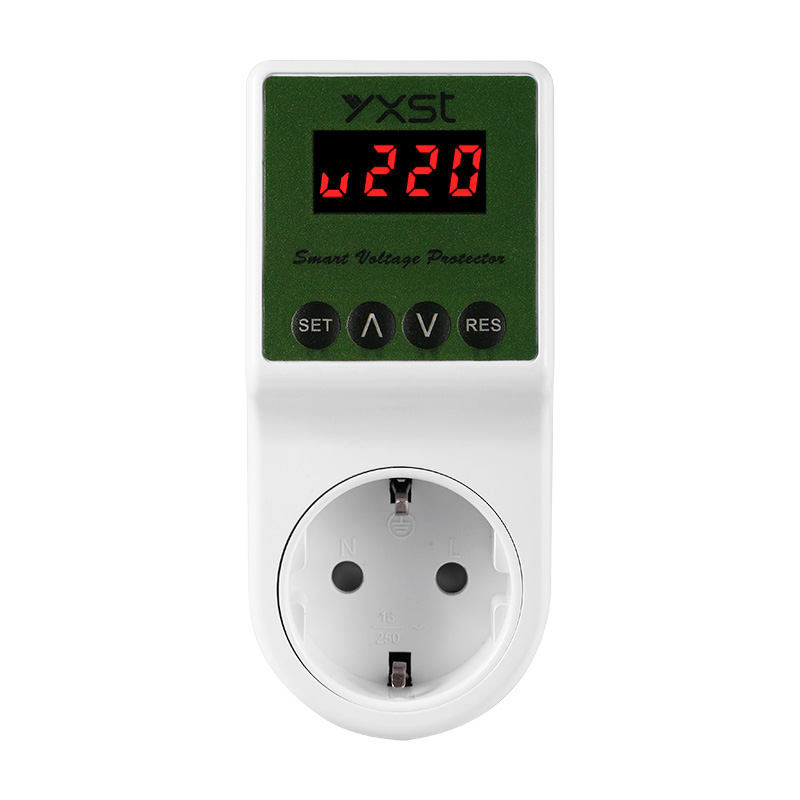
Parameter customization module: allows setting protection thresholds through physical buttons (such as voltage range 165V-260V, current 13A)
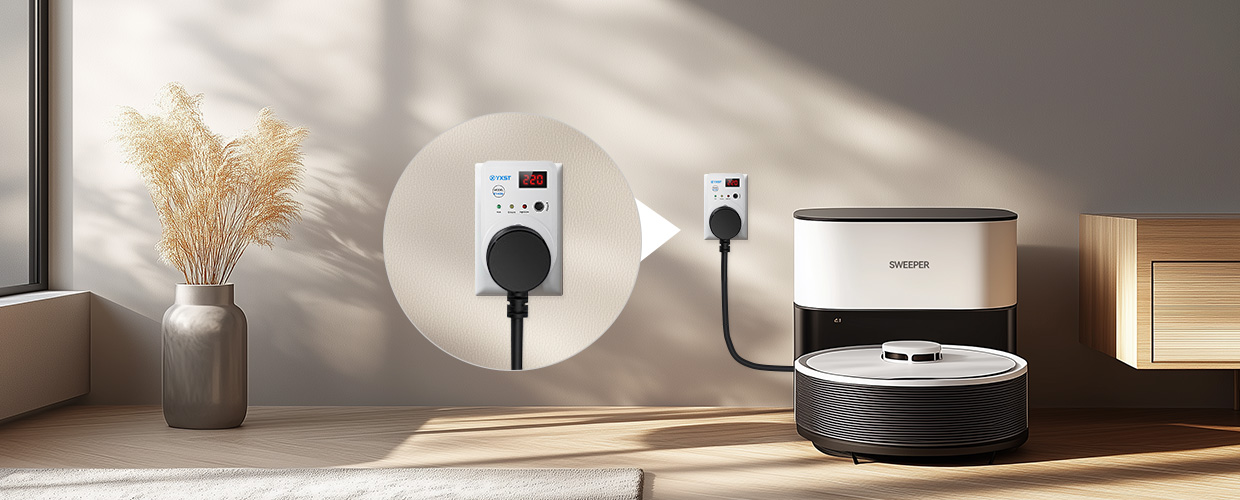
Application practice in home scenarios
Protection of home appliances: The compressors of refrigerators and air conditioners are easily damaged under low voltage, and the protector can prevent the motor from burning out due to voltage fluctuations.
Adaptation to special environments
In areas with poor grid stability such as Pakistan, such devices can cope with frequent voltage drops or surges. An adjustable model supports wide voltage input (140V-265V) and is equipped with a flame-retardant and waterproof casing to adapt to high temperature and high humidity environments.
Operation Guide: Parameter Setting and Troubleshooting
Manual Setting Process (Take Typical Model as an Example)
Enter Setting Mode: Long press the “SET” key, and the parameter code will be displayed on the screen.
Adjust Threshold: Modify the value by pressing the “+” or “-” key.
Save and Exit: Press the “SET” key continuously to switch to the next parameter, and wait for automatic saving after completing all settings.
Common Fault Response
Falsely Triggered Power Off: Check if it is caused by a short-term surge, and extend the recovery delay time (such as adjusting from 5 seconds to 210 seconds).
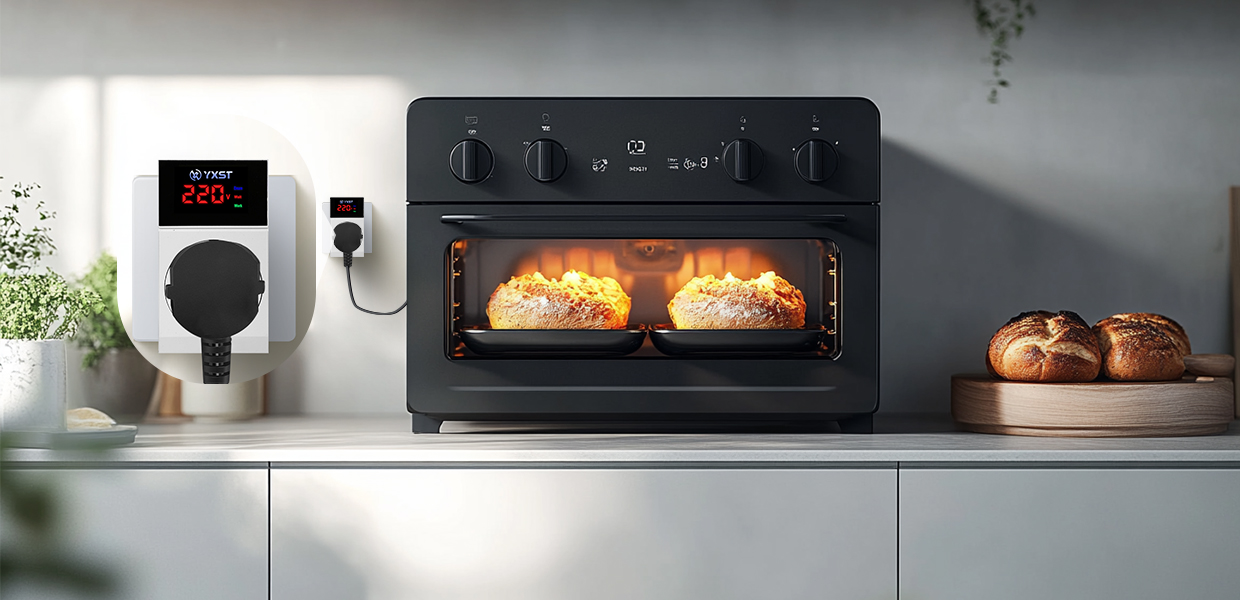
Questions and Answers
How effective is the digital voltage protector in Pakistan?
In areas with poor grid stability such as Pakistan, digital voltage protectors can effectively deal with the following problems:
◆ Frequent voltage fluctuations: The grid voltage may drop to 140V or rise to more than 260V. The protector can automatically cut off the power supply to prevent damage to electrical appliances.
◆ High temperature and high humidity environment: Some models are equipped with waterproof and flame-retardant casings to withstand high temperatures and 80% humidity.
◆ Compatibility: Supports wide voltage input (140V-260V), suitable for homes or small shops after the transformation of old lines.
How to choose the right model according to family needs?
The main reference factors include:
→ Load capacity:
□ High-power appliances such as air conditioners and refrigerators need to choose 20A or above models.
→ Functional requirements:
□ Only voltage protection is required: the basic model can meet the requirements.
□ Current monitoring or remote control is required.
What are the specific steps for manually setting the overvoltage/undervoltage threshold?
Take a typical physical button model as an example:
◇ Enter the setting mode: Press the “SET” button, and the screen displays the voltage code.
◇ Adjust the value:
□ Press the “+” button to increase the default overvoltage value from 230V to 260V (suitable for areas with frequent voltage fluctuations).
□ Press the “-” button to reduce the Undervoltage value from 180V to 165V (suitable for low-load nighttime electricity consumption).
◇ Save the settings.
What are the advantages of modular design?
Modular protectors improve flexibility through detachable functional modules:
◆ On-demand expansion: Users can purchase current monitoring modules or delayed recovery modules separately.
◆ Convenient maintenance: When a single module fails, there is no need to replace the entire machine, reducing the cost of use.
What is the difference between a voltage protector and a current protector?
Both focus on different dimensions of protection:
◆ Voltage protector: Focus on voltage fluctuations, suitable for areas with unstable power grids, to prevent overvoltage from burning the motor or under-voltage from causing the equipment to fail to start.
◆ Current protector: monitors overload or short-circuit current, for example, cuts off power when line current exceeds 15A to prevent overheating of wires and fire.
◆ Composite equipment: Some high-end models integrate dual functions, but the price is more than 40% higher than single-function models.
(Note: The above data and operating instructions are referenced from the general product manual, and specific models may differ.)
Conclusion
Digital voltage protectors are shifting from “passive defense” to “active regulation”. Their modular design and user-defined functions have greatly improved their applicability for home use. In areas where power grid infrastructure is yet to be improved (such as Pakistan), such devices will become the cornerstone of household power safety.
 English
  Español
  Deutsch
  Français
  Italiano
  Português